

Why Strength Training Is The Most Important Thing You Can Do In Perimenopause
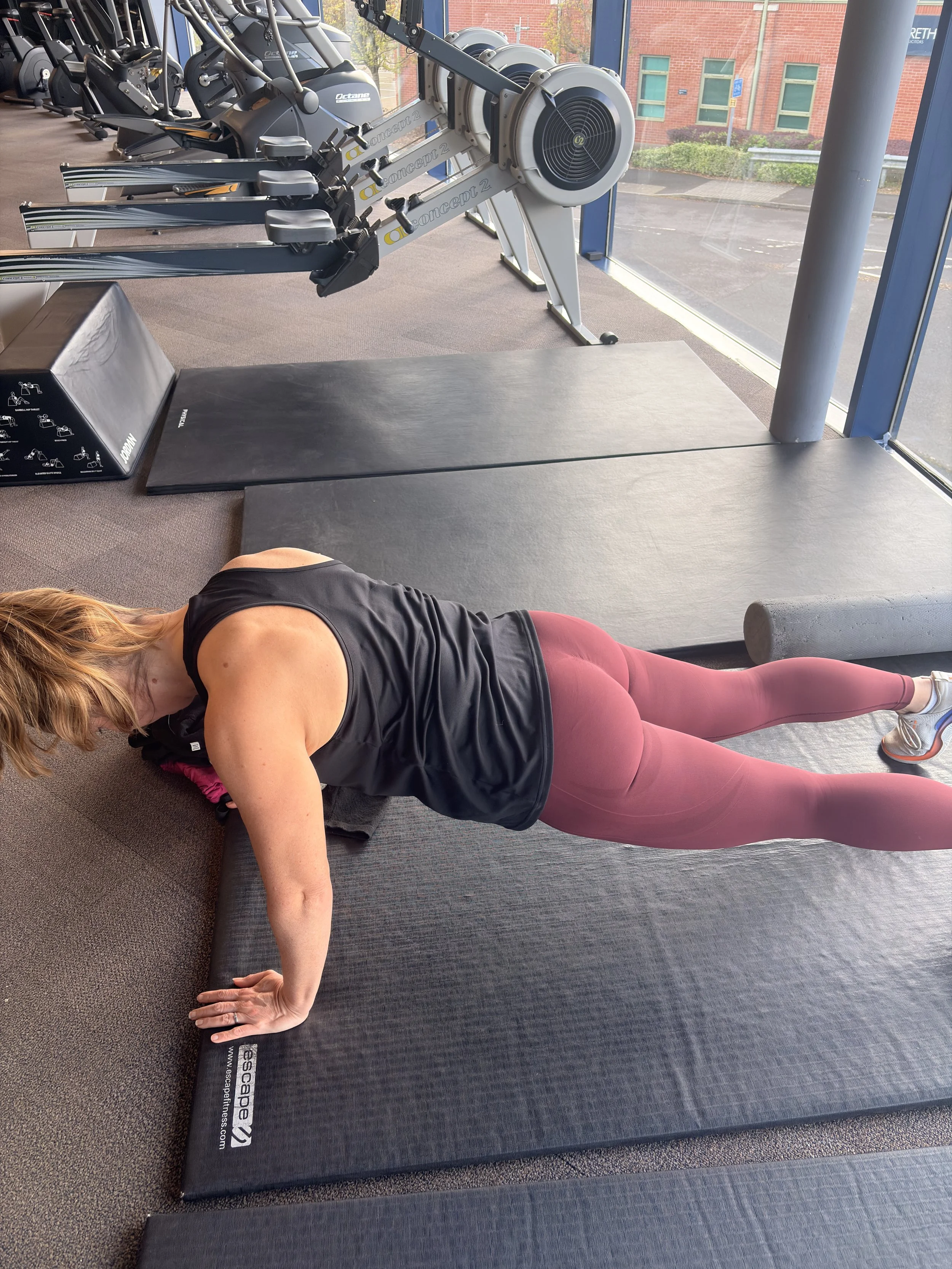
From your mid-40s, declining oestrogen changes the rules around how your body responds to exercise. Most fitness advice doesn't account for this.
Here's what the evidence actually says - and why strength training is the single most important thing you can do for your long-term health right now.
I want to start with something that might feel uncomfortable if you've spent years building your fitness around cardio: running, cycling, classes, anything that keeps you moving and burning calories. That approach isn't wrong. But if you're in perimenopause and it's the only thing you're doing, it isn't enough - and depending on how much of it you're doing, it may actually be working against you.
This isn't an opinion. It's where the research is increasingly clear.
From your mid-40s, declining oestrogen changes the rules around how your body responds to exercise. It affects muscle protein synthesis - the process by which your body builds and repairs muscle tissue. It accelerates bone density loss. It alters insulin sensitivity and how your body stores fat. It disrupts sleep, mood, and cognitive function. And it changes how quickly you recover from training.
Cardio doesn't address most of this. Strength training addresses all of it.
The evidence on resistance training for women in perimenopause and beyond is consistent and growing. It preserves and builds muscle mass at a life stage when the body is actively losing it - a process called sarcopenia that accelerates significantly around menopause. It stimulates bone remodelling, which matters enormously for long-term fracture risk. It improves insulin sensitivity and metabolic function. It has a measurable positive impact on mood, sleep quality, and cognitive health - all of which are commonly disrupted during the perimenopause transition.
No other single intervention does all of this at once.
I'm not saying abandon cardiovascular exercise. Cardio has an important role, particularly for heart health, which becomes an increasing concern post-menopause. But for women in perimenopause, cardiovascular exercise alone is insufficient. And if you're doing large volumes of it without the structural support of strength training, you may be driving up cortisol - a stress hormone that is already elevated for many women during this life stage — without giving your body the recovery and rebuilding stimulus it actually needs.
I see this regularly. Women who are doing everything they were told to do: running several times a week, attending classes, staying active. And yet their body composition is changing, their energy is unpredictable, their recovery is poor, and nothing seems to be working. The frustration is real. And it's almost always compounded by the fact that nobody has explained why.
The why matters. When oestrogen declines, your body becomes less efficient at building and maintaining muscle. The same training load that worked in your 30s no longer produces the same result. You need a different stimulus - specifically, a progressive resistance training stimulus that challenges your muscles appropriately and gives them the signal to adapt and grow.
This is also why intensity matters. Light resistance work with bands or very low weights has a role, particularly in rehabilitation or when someone is starting from scratch. But to produce the adaptations that protect your bone density, improve your metabolism, and preserve your muscle mass through perimenopause and beyond, you need to train with meaningful load. Not recklessly - progressively, with good technique and appropriate recovery built in. But meaningfully.
I came to strength training because I understood the evidence. I knew what declining oestrogen was doing to my body and I wanted to do the thing most likely to protect my long-term health. What I didn't expect was how much it would change the way I felt - not just physically, but in terms of my relationship with my body at a time when that relationship can feel complicated.
Strength training gave me something to build. A measurable, progressive, evidence-based process that worked with what my body needed rather than fighting against it.
That's what I want for the women I work with. Not a quick fix, not a transformation promise, but a genuine understanding of why this matters and a structured way to start.
If you're in perimenopause and you're not strength training, I'd encourage you to start. Not because it's a trend, not because it will change how you look (although consistency will), but because the evidence on what it does for your long-term health - your bones, your muscles, your metabolism, your brain is genuinely compelling.
And if you've tried before and it hasn't stuck, or you're not sure where to begin, or you're worried about doing it wrong - those are exactly the things I work with women on every day. The barrier is rarely motivation. It's usually information, confidence, and a starting point that feels manageable.
That's what I'm here for.
