

Creatine and Perimenopause - What the Research Actually Says
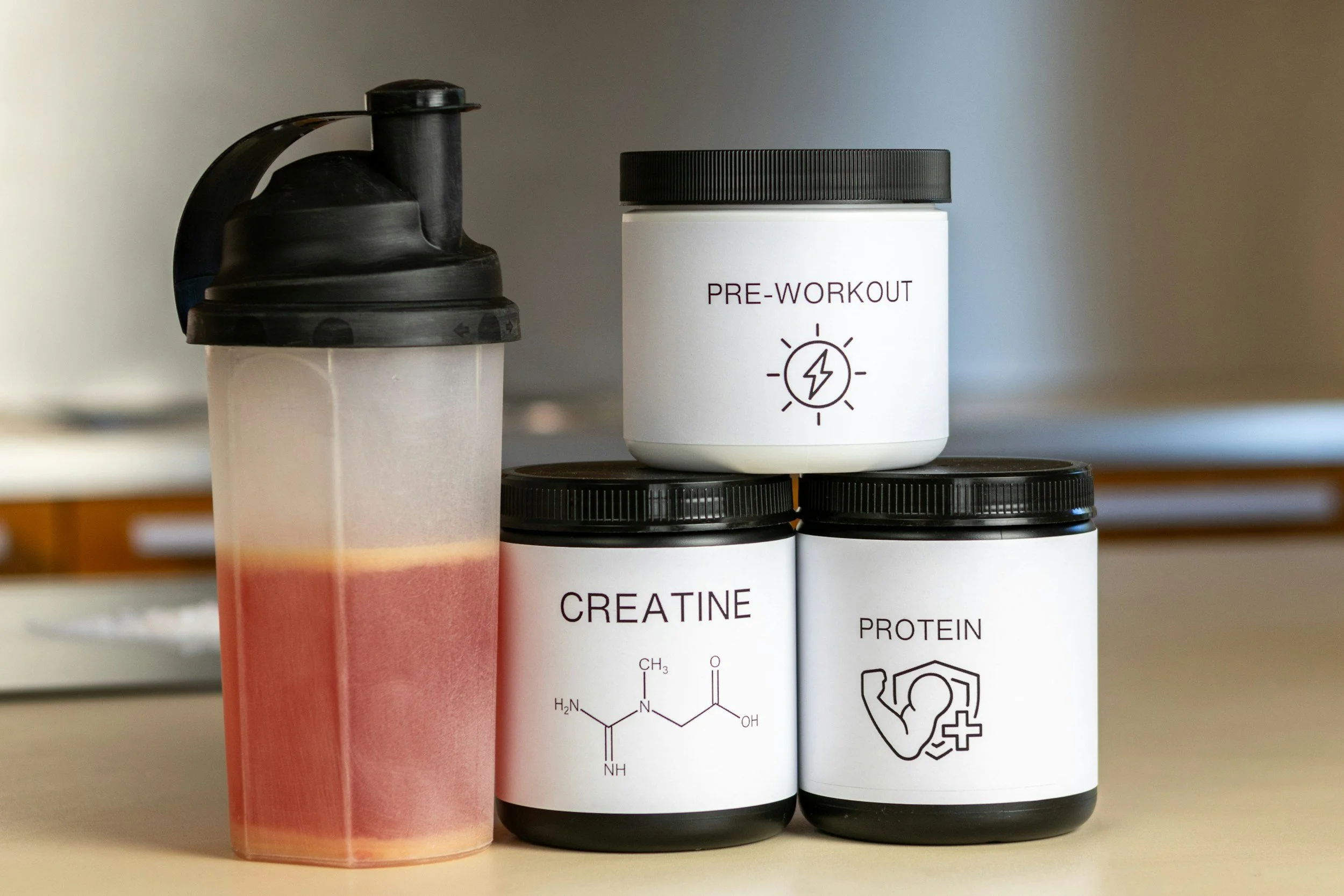
Why creatine might be the most overlooked tool for women in midlife
Creatine has a bit of a reputation problem. For decades it's been associated with bodybuilders, male athletes, and the kind of supplement culture that most women have no interest in. That reputation has kept a lot of women away from one of the most researched, well-tolerated, and potentially relevant supplements available to them, particularly in midlife.
It's worth looking at what the evidence actually says. Not what's circulating on social media, not what the supplement industry is claiming, but what the research shows, and where the gaps still are.
What is creatine and why does it matter for women?
Creatine is not a synthetic performance drug. It's a naturally occurring compound found in small amounts in meat and fish, and produced by the body from amino acids in the liver and kidneys. It plays a fundamental role in energy production, specifically in the rapid regeneration of ATP, the molecule your cells use as fuel during high-intensity effort, including resistance training.
Here's something that doesn't get discussed enough: women synthesise around 20% less creatine than men and consume 30 to 40% less through diet, particularly if they eat little or no red meat. This potentially leaves women more vulnerable to low creatine availability during periods of hormonal change, and it means women may have more to gain from supplementation than men do. Yet the vast majority of creatine research has historically been conducted on male populations.
That is now starting to change and new research specifically in perimenopausal women is now emerging.
What the research shows
One of the most important recent contributions to this area comes from Dr Abbie Smith-Ryan and her team at the University of North Carolina. Their review, which examined creatine supplementation in women across the lifespan - from menstruation through to menopause, makes a compelling case that women are an under-researched population with potentially more to gain from creatine than men. A further review published in 2025 in the Journal of the International Society of Sports Nutrition examined creatine specifically across hormonal life stages including menopause. These papers are among the most thorough available on this topic.
The evidence across both is consistent in several areas.
Muscle mass and strength
When combined with resistance training, creatine supplementation shows meaningful benefits for muscle mass and strength, particularly at doses of 5 grams per day or more. Lower doses of 1 to 3 grams per day have not produced the same results in the research, which is worth knowing if you're considering supplementation. The dose does matter!
A 14-week study published in 2025 involving 15 perimenopausal and postmenopausal women found that 5 grams of creatine monohydrate daily combined with twice-weekly strength training produced significant increases in lower-body strength and improvements in body composition. This is a small study, but it's the kind of specific, targeted research that has been missing until very recently.
This is relevant because sarcopenia, the age-related loss of muscle mass, accelerates significantly around menopause, and declining oestrogen reduces the efficiency of muscle protein synthesis. Anything that supports the muscle-building response to resistance training is worth taking seriously at this life stage.
Cognitive function and mood
This is where the research is developing quickly and the findings are genuinely interesting.
Creatine is not just stored in muscle, it's also found in the brain, which has very high energy demands. The cognitive changes many women experience during perimenopause such as brain fog, word-finding difficulties, and difficulty concentrating are not simply in their heads. Research shows that perimenopausal women show different activation patterns in brain regions involved in cognitive tasks as oestrogen fluctuates, reflecting reduced metabolic support. Creatine may help address this by supporting brain energy metabolism, improving memory, reducing mental fatigue, and supporting mood.
A 2025 randomised controlled trial involving 36 perimenopausal and menopausal women found that eight weeks of creatine supplementation improved reaction time and reduced mood swing severity. A further trial published in 2026 in the Journal of the American Nutrition Association found creatine to be a promising, safe, and effective strategy for improving cognitive outcomes and elevating brain creatine concentrations in this population.
Some research has also shown that women with depression who added creatine to standard treatment showed meaningful improvements in depressive symptoms. This is not a substitute for medical support, but it adds to the picture of creatine as something with broader relevance than muscle alone.
These are small studies and the research is still developing. But the direction of the evidence is consistent - and for women experiencing cognitive and mood symptoms during perimenopause, this is an area worth watching.
Sleep
Sleep quality is another emerging finding. A 2025 study found that creatine combined with strength training produced notable improvements in sleep quality in perimenopausal women specifically - relevant given that up to 47% of women in this life stage experience significant sleep disturbance. The Smith-Ryan review also highlights potential benefits for sleep duration and quality, though the evidence here is still growing.
Bone health
The evidence here is more mixed. Some research shows positive effects on bone geometry and lean mass in post-menopausal women when creatine is combined with resistance training. Other studies show no significant benefit. On balance, resistance training remains the best-evidenced intervention for bone health - creatine may support it, but the evidence is not yet strong enough to make confident claims.
Safety
This one is straightforward. Research on creatine supplementation in women has found no association with significant weight gain, liver or kidney complications, or serious side effects. The Smith-Ryan review concludes that the overall risk-to-benefit ratio of creatine supplementation appears to provide more benefit than risk - a strong statement from researchers who have spent considerable time reviewing the evidence.
One practical note worth knowing: creatine can cause eGFR readings - a marker of kidney function to appear artificially low on blood tests. If you're supplementing, mention it to your GP before any routine blood work.
The myths worth addressing
"It will make me bloated."The older narrative that creatine causes bloating and water retention in women looks increasingly outdated in light of newer female-specific research. Creatine appears to increase intracellular water - water inside the cells themselves, which may actually improve cellular hydration rather than causing the kind of surface-level bloating women worry about. Studies found no increase in body weight during short loading periods in women. A standard 5 gram daily dose without a loading phase is the most straightforward approach, and any temporary scale changes tend to settle quickly.
"It's for bodybuilders." The emerging female-specific literature is increasingly positioning creatine not as a gym supplement but as a healthy ageing intervention - one that sits at the intersection of muscle health, bone health, cognitive function, mood, sleep, and fatigue management.
"It will cause weight gain."Creatine may cause a small initial increase in scale weight due to water moving into muscle cells. This is not fat gain. For women in perimenopause concerned about body composition, the research suggests creatine combined with resistance training supports favourable changes in lean mass rather than working against them.
Where the evidence stands right now
Until very recently, there were no published clinical trials specifically in perimenopausal women. The Smith-Ryan review is explicit about this gap - the current recommendations for this life stage are based on what we know about creatine physiology, what we know about hormonal changes in perimenopause, and studies in younger and postmenopausal women. That gap is now beginning to close, with small but meaningful trials emerging and larger studies underway.
What the current evidence does show is that women synthesise less creatine naturally, consume less through diet, and appear to respond positively to supplementation across muscle, cognitive, mood, sleep, and fatigue outcomes, particularly when combined with resistance training. The biological rationale is sound, and the direction of the emerging research is consistent.
When to take it
The research on timing is less definitive than the supplement industry would have you believe. Post-workout appears to have a slight edge - muscles are metabolically active after training and may be more receptive to creatine uptake at that point. Taking it alongside a meal containing protein and carbohydrates may enhance this further.
On rest days, timing is largely irrelevant. Take it at whatever point in the day you're most likely to remember it - with breakfast, with lunch, alongside your morning coffee. Consistency across every day, including days you don't train, is what builds and maintains the muscle creatine stores that produce results. Missing training days is fine. Missing supplementation days undermines the process.
What this means practically
If you're strength training in perimenopause and considering creatine, the evidence points toward creatine monohydrate at 5 grams per day as the most researched and well-tolerated approach. A loading phase is not necessary - daily consistent supplementation achieves the same result over three to four weeks with fewer side effects.
The simplest approach: 5 grams of creatine monohydrate daily, post-workout on training days, at a consistent time on rest days. No loading phase needed.
Creatine is not a substitute for resistance training, adequate protein intake, good recovery, or sleep. It works alongside these things, not instead of them. But as one tool in a well-constructed approach to strength and health in midlife, the evidence is more compelling than most women have been led to believe - and the case for women specifically is stronger than the supplement industry's historic focus on men would suggest.
Further Reading
Smith-Ryan AE et al. Creatine in women’s health: bridging the gap from menstruation through pregnancy to menopause, Journal of the International Society of Sports Nutrition, 2025, Vol.22, No. 1, 2502094. Read the paper here
