

Technique First, Always
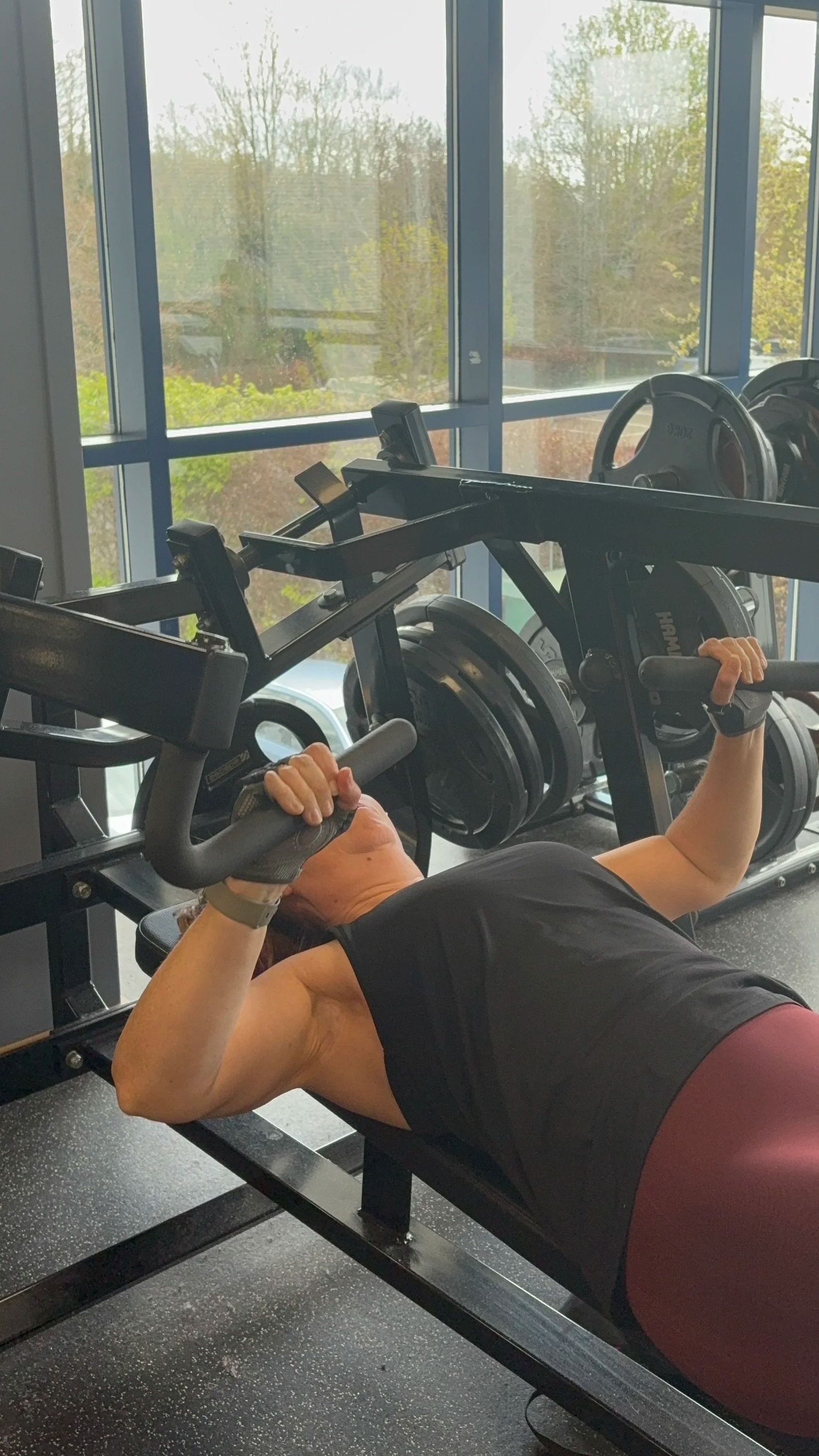
Why Loading Too Soon Is the Most Common Mistake Women Make When Starting or Returning to Strength Training
There's a particular kind of enthusiasm that comes with deciding to start strength training. You've done the reading, you’ve watched the videos and you understand why it matters. You're ready to get started and you want to see results. That enthusiasm is genuinely valuable as it's what gets women through the door and onto the gym floor.
It's also the thing most likely to mess up your progress in the first few weeks or months, if it isn't channelled in the right direction.
The most common mistake I see women make when they return to exercise or start strength training for the first time is adding load before the foundations are in place. It's easy to understand why. Bodyweight movements can feel straightforward and an unloaded bar feels light. The instinct is to progress quickly, to add weight, to feel like you're doing something substantial.
But load tolerance isn't simply about how strong you feel in the moment. It's about whether your joints, your connective tissue, and your movement patterns are prepared to handle that load safely, consistently, and over time.
Here's something that doesn't get discussed enough: muscle adapts faster than connective tissue. When you start a new training programme, your muscles respond relatively quickly to the new stimulus. Your tendons and ligaments, the connective tissue that supports and stabilises your joints adapt more slowly. If you increase load faster than your connective tissue can adapt, you create a mismatch. And that mismatch is where injuries happen - the knee pain that develops after a few weeks of squatting, the shoulder that starts complaining after pressing, the lower back that twinges on deadlifts. I’ve had all 3!
These aren't random niggles. They're almost always the result of loading a movement pattern that isn't yet stable under load.
For women in perimenopause and beyond, this matters more than it ever used to. Declining oestrogen affects connective tissue integrity - tendons become less pliable, and the risk associated with loading patterns that aren't yet established increases. This doesn't mean you can't train hard at all. It simply means the case for getting technique right before adding load is even stronger than it would be for a younger woman.
What about HRT?
If you're on HRT and your symptoms are well managed, you might be wondering whether this still applies to you. The answer is yes. HRT offers some protection against the connective tissue changes associated with oestrogen decline, but it doesn't eliminate them, and it doesn't change the fundamental principle that loading a movement pattern before it's stable increases injury risk at any age or hormonal status. Technique first isn't a perimenopause-specific precaution. It's simply good practice, and in midlife, the case for it is stronger than ever.
This is where The Stillpoint® comes in
The name of my approach - The Stillpoint® - reflects something I believe deeply about how women in midlife need to train. When everything around you says push harder, do more, train through it, the most effective thing you can do is pause.
Not give up. Not go backwards. Pause - and build from a place of understanding rather than urgency.
The Stillpoint® framework starts with exactly that: assessing where you are, understanding how you move, and establishing the foundations before any load is introduced. It's the reason I spend real, unhurried time on the six foundational movement patterns - squat, hinge, push, pull, carry, and core stability, before progressing to anything more demanding.
I don’t see this as a slower approach at all, in fact for women 40+ it's a more intelligent one. A woman who understands how to hinge properly, who can feel the difference between a stable and an unstable squat, who knows how to brace her core under load - that woman will progress further, faster, and with far fewer setbacks than one who added weight before those patterns were established.
The fear of getting it wrong is one of the most common barriers I hear from women who are new to strength training or returning after a break. The gym can feel intimidating. The equipment can feel unfamiliar. The risk of injury, or of making existing aches and pains worse feels very real.
That fear is legitimate, and it's exactly why technique-first isn't a cautious approach.
Progressive overload which is essentially a gradual increase of the demand placed on the body over time is the mechanism through which strength is built. But progressive overload only works when it's built on a foundation that can support it. Increasing weight on a movement that isn't yet stable doesn't build strength. It builds compensation patterns, where the body will find workarounds rather than moving through the instability properly. Those patterns are hard to unlearn, and they're where chronic pain begins.
I work with a lot of women who come to me having tried strength training before and stopped because something hurt, or because they didn't feel confident, or because the programme they were following didn't make sense for where they were. In almost every case, the issue wasn't their effort. It was that nobody had taken the time to establish the foundations before asking their body to perform under load.
That's what I do differently. And it's why every client I work with, regardless of background or fitness level, starts in the same place: with the movements that matter most, at a load that allows them to be done well.
The Stillpoint® is where that process begins.
Everything else follows from there.
